
Why “Taking Turns” Works Better Than “Sharing” for Children Under 6
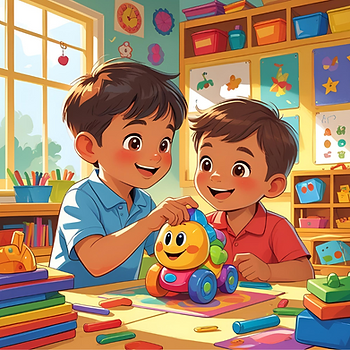
If you’ve ever asked a preschooler to share a toy and watched the meltdown that followed, you’re not alone. While the idea of sharing sounds kind and generous, it’s actually a difficult and often developmentally inappropriate concept for young children—especially those under the age of six.
That’s because during this stage of development, known in Montessori as the first plane of development, children are focused on developing themselves as individuals. Their play is often parallel rather than interactive, and their understanding of possession and time is still developing. So when we ask young children to "share," we may be expecting more social and emotional maturity than they’re capable of at this age.
Instead of insisting on sharing, consider teaching taking turns—a concept that is easier for young children to understand and leads to meaningful lessons in patience, empathy, and social interaction.
The Problem with “Sharing”
When adults use the word “share,” we often mean “let someone else have it now, even if you’re still using it.” But to a young child, this can feel like forced giving-up—not generosity. In the Montessori approach, we believe a child’s deep concentration and engagement in work should be respected. Interrupting that focus in the name of “sharing” sends a confusing message: that others can take what you’re using whenever they want.
This can lead to frustration, power struggles, and resentment—not the cooperative spirit we were hoping for.
The Power of Taking Turns
“Taking turns” offers an age-appropriate alternative. Here’s why it works:
It Teaches Patience. For the child who is waiting, taking turns introduces the concept of delayed gratification. They learn to manage big feelings like frustration and disappointment, while trusting that their turn will come.
It Builds Empathy. For the child using the toy or material, taking turns creates an opportunity to practice empathy. They know someone is waiting and, when ready, can experience the joy of offering something to a friend.
It Respects the Child’s Work. In Montessori, we place great value on uninterrupted work cycles. Taking turns allows the child to finish their activity before giving it to another—helping them build concentration and independence without interruption.
It Models Social Boundaries. Taking turns helps young children understand and respect personal space and belongings. It sets up clear and fair expectations, reducing conflict and fostering trust.
How to Support Taking Turns
Use Clear Language. Instead of saying “Share the truck,” try: “Charlie is using the truck right now. You may have a turn when he is finished.”
Model and Narrate. Offer simple language like, “Oh look, you waited so patiently. Now it’s your turn!” or “Let’s ask when we can have a turn.”
Use Visual Tools. In a group setting, sand timers or turn cards can help children visualize the passing of time and whose turn is next.
Trust the Process. It may take time, but with consistent modeling and support, children will begin to understand the rhythm of turn-taking.
Young children are still developing the tools for social interaction. While the concept of sharing might be too abstract or emotionally challenging, turn-taking is tangible and fair. It builds social-emotional skills, supports cognitive growth, and honors the developmental needs of the child.
So next time you’re tempted to say, “You need to share,” try guiding your child through taking turns instead. You may find the results are not only more peaceful—but more meaningful, too.


Comments